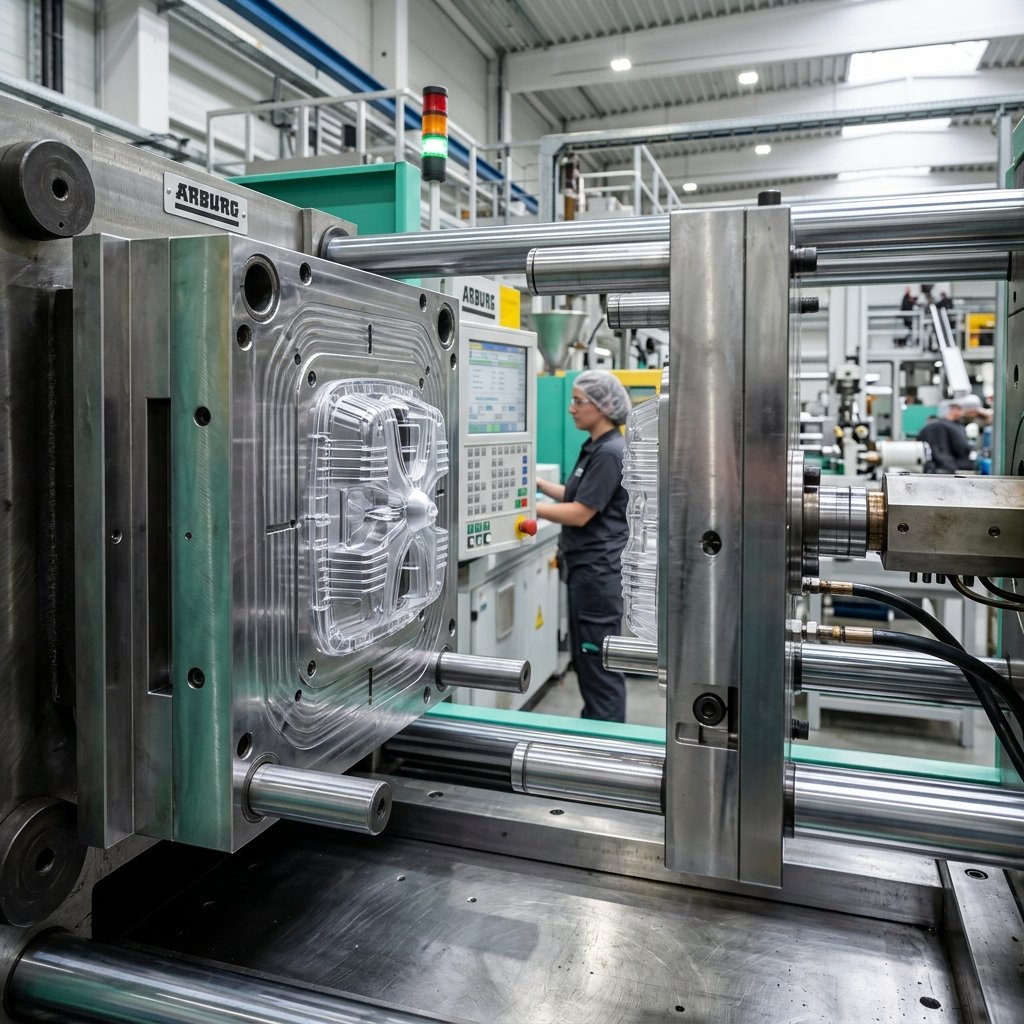
Look, if you're a product designer staring at your latest CAD model, trying to figure out how to actually make the thing, you’ve probably heard "injection molding" thrown around a hundred times. Let's drop the engineering textbook jargon for a second. Think of it like a high-tech waffle iron on steroids. You’ve got batter (melted plastic), an iron shaped like your product (the steel mold), and you hit it with crazy amounts of heat and pressure to get a perfect part every single time.
The real magic of injection molding isn't just making a part—it’s making that exact same part ten thousand, or a million times, without breaking the bank. This is your backstage pass to how the plastics industry actually works. We’re going to walk through what goes on inside those massive machines on the floor and what you absolutely need to know before you send your design off to be manufactured.
How the Sausage Gets Made (Literally)
To really get it, picture a massive, heavy-duty industrial ballet. It all kicks off with raw material: little plastic pellets that look like translucent lentils. These get dumped into a hopper, which feeds them straight down into a super-heated barrel.
Inside that barrel? A massive rotating screw. As it turns, the friction and heat melt the plastic down into a thick, gooey liquid—kind of like hot molasses. Then comes the main event. That screw acts like a giant plunger, shooting the melted plastic into a custom-machined block of steel (your mold) under insane pressure. We’re talking enough tons of pressure to crush a pickup truck. This forces the plastic into every tiny little corner of your design.
Once the plastic is in there, cold water running through channels inside the steel mold chills the part solid in seconds. The mold snaps open, ejector pins push your brand-new part out, and the machine starts the whole process over again. A lot of the time, this whole cycle is over in less than fifteen seconds. It’s wild to watch.
Why Product Designers Swear By It
You might be wondering, "Why don't I just 3D print or CNC this?" Those have their place, sure, but when you're trying to actually scale a product, injection molding wins hands down. Here’s why:
- Pennies on the Dollar: Yeah, cutting the steel mold up front is going to cost you. It’s a serious investment. But once that tool is locked and loaded, the cost to make each individual part drops through the floor. If you're running 10,000 units, molding is a no-brainer.
- Dead-On Consistency: You want part #1 to look exactly like part #1,000,000. A good steel mold doesn't get tired on a Friday afternoon. The repeatability is nuts, which is a lifesaver when you've got parts that need to snap together perfectly.
- Any Material Under the Sun: The sheer number of plastics you can use is staggering. Need a part to survive under the hood of a car? There's a high-temp plastic for that. Need a grippy, rubber overmold for a power tool? Done. You get to cherry-pick the exact strength, flex, and UV resistance your product needs.
Designing for the Mold (DFM 101)
This is where a lot of guys trip up. You design a beautiful, sleek shape on your screen, but physically pulling it out of a solid block of steel is another story. If you want to save yourself a ton of headaches (and cash), follow these golden rules:
- Keep Your Walls Uniform: Think about baking a cake that’s super thick on one end and paper-thin on the other. It bakes unevenly and caves in. Plastic is the same way. Thick sections cool slower and sink in, leaving ugly divots called "sink marks." Keep your wall thickness as consistent as possible across the whole part.
- Give It Some Draft: If your part has perfectly straight, 90-degree walls, it’s going to get stuck in the mold. Imagine trying to pull a perfectly square ice cube straight out of a rigid tray. Always add a slight taper—called a "draft angle"—so the part pops out clean. Even a 1 or 2-degree slant makes a world of difference.
- Kill the Sharp Corners: Sharp interior corners are the enemy. Molten plastic hates flowing around sharp 90-degree turns, and when the part cools, those sharp corners become massive weak points. Always round them off with a generous radius.
Partnering Up
We’ve barely scratched the surface here, but getting these basics down will make your manufacturer love you. At FD Group, we totally geek out over this stuff. We’re not the guys who just take your file, hit a button, and shrug if it fails. We want to actually collaborate. By running mold flow simulations and tweaking your design before we ever touch a piece of steel, we make sure your product isn't just cool—it’s actually manufacturable.
Taking a product from a screen to a physical, molded part is a rush. Keep these DFM rules in your back pocket, and you'll be well on your way to designing stuff that looks killer and rolls off the assembly line without a hitch.